From Dillon Gymnasium to the Emergency Room
4/10/2020
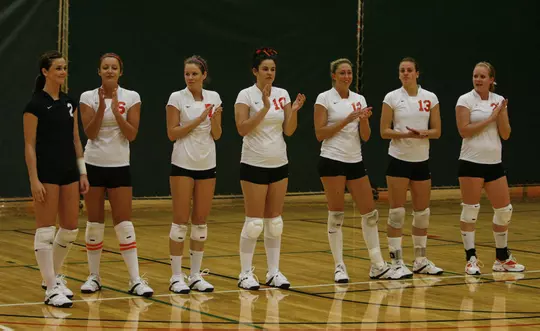
In 2007, Princeton University was the first Ivy League women’s volleyball team go a perfect 14-0 in conference play. The team won the Ivy League Championship and advanced to the NCAA Tournament with Jessica Hoffmann ’09, a middle, a key part of the squad. 13 years later, Hoffmann is an emergency room physician in southern California and is now on the frontlines of the COVID-19 pandemic.
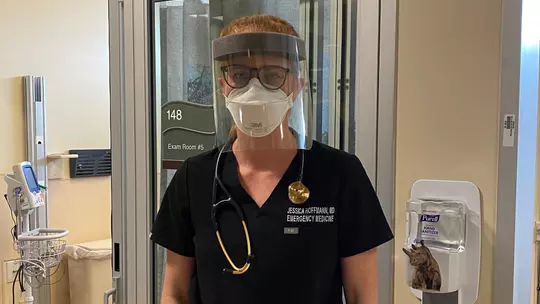
The Huntington Beach, California, native primarily works at a Veterans Affairs (VA) hospital along with the University of California-Irvine Medical Center. Occasionally, Hoffmann goes to Catalina Island, California, and works in a rural setting.
Head coach Sabrina King was an assistant coach during Hoffmann’s four years at Princeton and the bond between the two remains close to this day. It comes as no shock to King that Hoffmann has gone on to play such an important role in society.
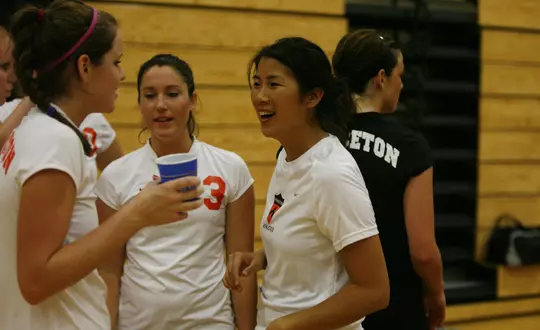
I think Jessica was just always one of those people who was naturally bright and excelled at most everything she did. She did not get overstressed and that demeanor serves her well in the ER. She has always loved to be in the action – the kind of person who would volunteer for anything, was game for everything, and was not overly worried about failure. She had a just go-for-it attitude. The longer I work at Princeton I realize that level of self-assuredness is harder to find and ever more valuable in these stressful times.Head Coach Sabrina King
King has fond memories of Hoffmann’s time as a student-athlete and it is evident her competitive drive and leadership skills have carried over to her medical career. Along with the Tigers’ Ivy League Championship in 2007, Princeton went 77-14 overall and 45-11 during Hoffman’s four seasons. A scrappy player who was undersized for a middle, Hoffmann compensated for her height disadvantage with craftiness and smarts. She adjusted well to out of system plays and bad sets while always being positive and steady.
“Jessica was a goofball,” King articulated. “She would make a competition out of anything, every drill was an opportunity for her to take things to the next level. She was part of the great 2007 team that was the first Ivy team to go 14-0 in league play, and she played an integral part of the team’s competitive edge – I think she helped prepare them with every practice making ordinary drills more intense and fun by infusing her sense of competitiveness into them. However, Jessica’s competitiveness was completely playful. She was the most friendly person off the court and was especially welcoming to the first-years. She was like a mother to them, so it’s easy to see why ER work suits her!”
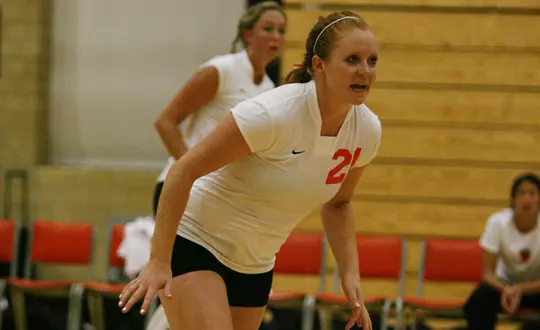
Hoffmann’s go-for-it attitude and level of self-assuredness are key in her day-to-day functions; as an ER physician she is the first provider to see a patient and it’s her job to figure out what’s going on. Nurses will triage the patients, put a mask on them, try to put them in a room where they can be isolated then it’s Hoffmann’s job to go in there, evaluate them, run all the diagnostic tests and try to stabilize them.
“Anyone who comes in with coronavirus symptoms, is needing real medical attention in terms of interventions and is pretty sick, they come straight back to the emergency room with us,” said Hoffmann. “One of the things about being an ER physician is that we are always the first provider to see the patient and so patients come in with undifferentiated pathology. It’s always our job to figure out what’s going on and this is why ER doctors are at such great risk of coronavirus. Every patient walking through the door has the potential to have it.”
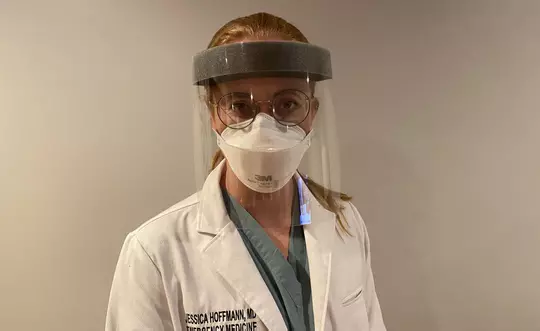
While no two days are ever the same in the ER, COVID-19 has caused major adjustments in how Hoffmann goes about her duties. Her hospital no longer allows visitors.
“It changes the flow of our entire emergency room,” explained Hoffmann. “There is a greater sense of camaraderie and teamwork between all the different providers along with the different departments in the hospital helping out.”
During these rapidly evolving and uncertain times, Hoffmann has leaned heavily on the lessons learned during her time both on and off the court at Princeton.
“There are things that you learn as an athlete whether its communication, divvying up various roles, learning who trust and who you can rely on are incredibly important any time in health care, but especially right now when we’re facing something that’s incredibly unknown,” said Hoffmann. “The really interesting part, at least for me, is we’re having to adapt a lot.”
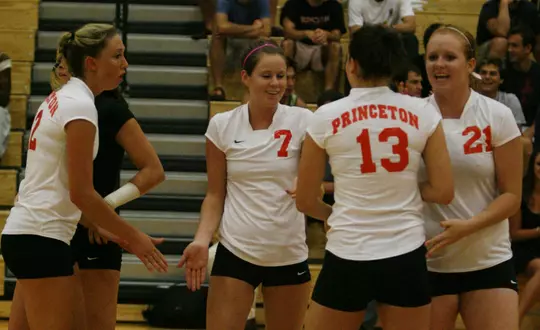
As well the skills she harnessed as a volleyball player, the skills she developed as a student at Princeton have also paid dividends.
“Princeton’s model of education pushes you to develop an independent thought process and really helps you develop critical thinking,” said Hoffmann. “That applies particularly to this situation; this is a situation with a completely new disease where we don’t understand the physiology about it. We can’t just read a textbook saying here’s how you treat it, it’s really kind of trying to develop a thought process of what could potentially help. Just that way of thinking is something your education at Princeton really prepares you for. Your academics aren’t just straight forward multiple-choice answers where you have to guess the best-answer, they really push you to think independently.”
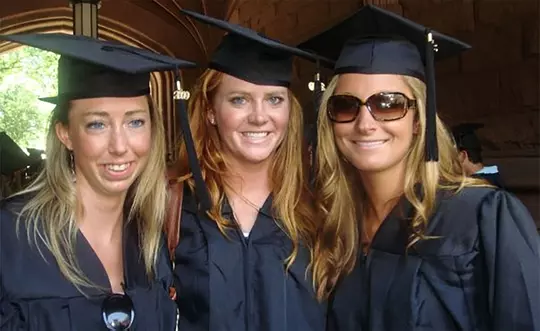
Hoffmann still loves volleyball and lists the 2007 Ivy League Championship as her favorite memory. She feels sympathy for the student-athletes who had their seasons and careers cut short, but offers hope that there is a light at the end of the tunnel during these trying times.
“The beauty of Princeton is there’s such a strong community and such strong attendance at reunions. I hope people find some solace in knowing that they’ll be able to enjoy that once we get through all of this. There’s a lot of universities where you graduate and that’s it, we’re lucky to be at Princeton where people love to support, come back and be a part of the community.”Jessica Hoffmann '09