
Princeton University Athletics


Bracket Builders
March 12, 2007 | General
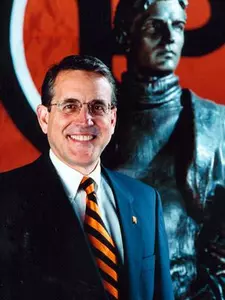
Gary Walters wants you to know that, when he and the other nine members of the NCAA Division I Men's Basketball Committee officially begin the selection process for the 2007 tournament this week, it won't really be about the excitement of maybe the greatest three weeks in American sports.
There will be lots of data to sort, plenty of numbers to crunch, way too much information to process and a great deal of waiting for the final results of conference tournaments. Heck, it won't even be about the most famous symbol of the NCAA tournament, the bracket itself, until sometime in the afternoon of Selection Sunday.
“Frankly, the selection process isn't glamorous at all,” says Walters, Princeton's Director of Athletics and the chair of the committee in 2006-07. “It's a fundamental, detailed and tedious process, and the tedium lasts for a full five days right to the end.”
Still, sitting in his office overlooking Jadwin Gym on the day before the calendar turns to March, Walters also wants you to know that every part of the process is worth the effort.
“It's both exciting and exhilarating, and it's a labor of love for all of us that have been fortunate enough to be part of the committee,” he says. “Just to be a part of the event in any way is a special thing.”
Walters, in his fifth and final year on the committee, is in his only year as the group's public face. His last three weeks or so have been filled with media commitments both large and small, and the questions and complaints that inevitably follow the final selections will fall squarely on his shoulders both publicly and privately.
Nine days ago, Walters appeared on CBS at halftime of the network's telecast of Louisville-Connecticut. This Sunday night, immediately following the tournament selections, he will again appear on the network, this time to take questions mostly about those “bubble” teams that made it and those that didn't.
Walters says that this season, in that regard, may be the most challenging yet.
“I think there's definitely been a lot of congestion in the middle of a lot of conferences,” he says. “These last couple weeks of play and the conference tournaments are going to be very important. Some years we've come down to looking at six teams for three spots; this year it might be more like 10 teams for four spots.”
On one level, the selection process is simple. Thirty-one teams make the field as conference champions; the committee is responsible for choosing the 34 teams that will make the field as at-large selections. When the entire field is finally set, the committee is then charged with compiling a fair and equitable bracket.
On almost every other level, from the glut of team data Walters examines on his office computer to the thick manuals that line his shelves to the information (and misinformation) now available to the public concerning the selections, the process is anything but simple.
Perhaps the most notable aspect of Walters' chairmanship of the committee has been the unprecedented attempt, in Walters' word, to “demystify” the tournament selection process.
In February, 20 members of the Basketball Writers Association of America (BBWAA) were invited by the NCAA to participate in a mock selection exercise. The writers, two of whom combined to serve as “one” committee member, were given access to the same information the real committee will have in Indianapolis this week. NCAA staff members were on hand to assist in the process, just as they will be this week. There were mock “upsets” in conference tournaments, a final deadline and a final consensus bracket that was published throughout the country in the newspapers represented by the mock committee.
Inevitably, those writers came back from Indianapolis with a much greater understanding of the process. Of course, not everyone was impressed.
“I think it was a terrific idea to open the process up and give people a real sense of how this works,” says Walters. “But as I like to say sometimes, 'no good deed goes unpunished.' There was about two days of very positive feeling, and then there was backlash that we were simply trying to curry favor with the press. I think all of us know that comes with the territory.”
Walters also realizes that the mock selection exercise won't completely change the public perception, nor will it make every facet of the media completely responsible in its own reporting about the championship.
“I would say that the thing you find most is people stating things that are unequivocally inaccurate but, nevertheless, stating them with a great amount of conviction,” jokes Walters. “But we cut through that and worry about our process.”
Though the committee is careful to avoid talking about any particular team prior to the announcement of the bracket, Walters is willing to discuss some of the aspects of the process itself.
When the committee convenes Wednesday, each member will be asked to provide in advance a list of teams for at-large consideration. If a team appears on at least eight of those 10 lists, it immediately will appear on the committee's at-large board.
Walters says that, in any particular year, that at-large board could contain as many as 25 teams.
Only after teams, including those who have already earned automatic bids, are listed is the seeding process discussed. In this “list and rank,” system, votes are counted in the same ways as a cross country race. For instance, if a team gets 10 “1's,” for a total of 10 “points,” they would rank ahead of a team with nine “1's” and one “2” in the seeding process.
Walters, who joined the committee in 2002 after a nomination process through the NCAA's Championship Cabinet, has the kind of background that makes sense for the committee. Princeton's Director of Athletics since 1994, he was also a college basketball head coach in Division I at both Dartmouth and Providence. A former basketball captain at Princeton, he helped the Tigers reach the Final Four in 1965 and earn a top-five national ranking during his senior year of 1967.
According to the NCAA, Walters is only the second person to serve on the committee after having played in the Final Four, joining former Utah basketball star and later athletic director Arnie Ferrin.
“Every year at the Final Four we have a dinner for the 'alumni,' the people who've served on the committee,” says Walters. “I'm talking hundreds of people. What you realize is that it's a spectacular assembly of people who have worked diligently to make the game better.”
Indeed, the committee is not simply about making tournament selections and running the administrative details of the championship. The group is also given the responsibility for being stewards of the game itself, working with the rules committee and discussing changes in policies and procedures in the sport.
“I think most people think we run the tournament and that's it,” Walters says. “I understand that, because it's a huge event, but that's not the only responsibility we have.”
Still, Walters and his committee certainly realize the impact and footprint the tournament possess, and the group does a tremendous amount of leg work on that end. For the past several weeks, Walters has spent every weeknight watching basketball games from 7:00 until midnight. On Saturday, that schedule switches to noon to midnight. On Sunday, the process repeats itself again from noon until 9:00.
As committee chairman, Walters also traveled throughout the early season to watch games in person, including two trips to the West Coast, before cutting back on that travel schedule in the New Year simply so he could see more teams play. Still, the amount of work required to serve on the committee is certainly a challenge for any athletic administrator.
“I'm greatly indebted to this department and our staff for making Princeton athletics run smoothly,” he says. “For five years now, once January hits, the heavy lifting on the committee starts, but I don't think we've skipped a beat because of our people.”
In a few months, Gary Walters' five-year tenure on perhaps the NCAA's most important committee, and his one season stint as that committee's public face, will have come to an end. And though his day-to-day life may quickly become easier, he also knows his life will never be the same.
“I think it will be a mix of both regret and relief,” he says. “What I'll miss the most is the camaraderie and the outstanding people who work very hard to make the NCAA tournament the event that it has become.”
There will be lots of data to sort, plenty of numbers to crunch, way too much information to process and a great deal of waiting for the final results of conference tournaments. Heck, it won't even be about the most famous symbol of the NCAA tournament, the bracket itself, until sometime in the afternoon of Selection Sunday.
“Frankly, the selection process isn't glamorous at all,” says Walters, Princeton's Director of Athletics and the chair of the committee in 2006-07. “It's a fundamental, detailed and tedious process, and the tedium lasts for a full five days right to the end.”
Still, sitting in his office overlooking Jadwin Gym on the day before the calendar turns to March, Walters also wants you to know that every part of the process is worth the effort.
“It's both exciting and exhilarating, and it's a labor of love for all of us that have been fortunate enough to be part of the committee,” he says. “Just to be a part of the event in any way is a special thing.”
Walters, in his fifth and final year on the committee, is in his only year as the group's public face. His last three weeks or so have been filled with media commitments both large and small, and the questions and complaints that inevitably follow the final selections will fall squarely on his shoulders both publicly and privately.
Nine days ago, Walters appeared on CBS at halftime of the network's telecast of Louisville-Connecticut. This Sunday night, immediately following the tournament selections, he will again appear on the network, this time to take questions mostly about those “bubble” teams that made it and those that didn't.
Walters says that this season, in that regard, may be the most challenging yet.
“I think there's definitely been a lot of congestion in the middle of a lot of conferences,” he says. “These last couple weeks of play and the conference tournaments are going to be very important. Some years we've come down to looking at six teams for three spots; this year it might be more like 10 teams for four spots.”
On one level, the selection process is simple. Thirty-one teams make the field as conference champions; the committee is responsible for choosing the 34 teams that will make the field as at-large selections. When the entire field is finally set, the committee is then charged with compiling a fair and equitable bracket.
On almost every other level, from the glut of team data Walters examines on his office computer to the thick manuals that line his shelves to the information (and misinformation) now available to the public concerning the selections, the process is anything but simple.
Perhaps the most notable aspect of Walters' chairmanship of the committee has been the unprecedented attempt, in Walters' word, to “demystify” the tournament selection process.
In February, 20 members of the Basketball Writers Association of America (BBWAA) were invited by the NCAA to participate in a mock selection exercise. The writers, two of whom combined to serve as “one” committee member, were given access to the same information the real committee will have in Indianapolis this week. NCAA staff members were on hand to assist in the process, just as they will be this week. There were mock “upsets” in conference tournaments, a final deadline and a final consensus bracket that was published throughout the country in the newspapers represented by the mock committee.
Inevitably, those writers came back from Indianapolis with a much greater understanding of the process. Of course, not everyone was impressed.
“I think it was a terrific idea to open the process up and give people a real sense of how this works,” says Walters. “But as I like to say sometimes, 'no good deed goes unpunished.' There was about two days of very positive feeling, and then there was backlash that we were simply trying to curry favor with the press. I think all of us know that comes with the territory.”
Walters also realizes that the mock selection exercise won't completely change the public perception, nor will it make every facet of the media completely responsible in its own reporting about the championship.
“I would say that the thing you find most is people stating things that are unequivocally inaccurate but, nevertheless, stating them with a great amount of conviction,” jokes Walters. “But we cut through that and worry about our process.”
Though the committee is careful to avoid talking about any particular team prior to the announcement of the bracket, Walters is willing to discuss some of the aspects of the process itself.
When the committee convenes Wednesday, each member will be asked to provide in advance a list of teams for at-large consideration. If a team appears on at least eight of those 10 lists, it immediately will appear on the committee's at-large board.
Walters says that, in any particular year, that at-large board could contain as many as 25 teams.
Only after teams, including those who have already earned automatic bids, are listed is the seeding process discussed. In this “list and rank,” system, votes are counted in the same ways as a cross country race. For instance, if a team gets 10 “1's,” for a total of 10 “points,” they would rank ahead of a team with nine “1's” and one “2” in the seeding process.
Walters, who joined the committee in 2002 after a nomination process through the NCAA's Championship Cabinet, has the kind of background that makes sense for the committee. Princeton's Director of Athletics since 1994, he was also a college basketball head coach in Division I at both Dartmouth and Providence. A former basketball captain at Princeton, he helped the Tigers reach the Final Four in 1965 and earn a top-five national ranking during his senior year of 1967.
According to the NCAA, Walters is only the second person to serve on the committee after having played in the Final Four, joining former Utah basketball star and later athletic director Arnie Ferrin.
“Every year at the Final Four we have a dinner for the 'alumni,' the people who've served on the committee,” says Walters. “I'm talking hundreds of people. What you realize is that it's a spectacular assembly of people who have worked diligently to make the game better.”
Indeed, the committee is not simply about making tournament selections and running the administrative details of the championship. The group is also given the responsibility for being stewards of the game itself, working with the rules committee and discussing changes in policies and procedures in the sport.
“I think most people think we run the tournament and that's it,” Walters says. “I understand that, because it's a huge event, but that's not the only responsibility we have.”
Still, Walters and his committee certainly realize the impact and footprint the tournament possess, and the group does a tremendous amount of leg work on that end. For the past several weeks, Walters has spent every weeknight watching basketball games from 7:00 until midnight. On Saturday, that schedule switches to noon to midnight. On Sunday, the process repeats itself again from noon until 9:00.
As committee chairman, Walters also traveled throughout the early season to watch games in person, including two trips to the West Coast, before cutting back on that travel schedule in the New Year simply so he could see more teams play. Still, the amount of work required to serve on the committee is certainly a challenge for any athletic administrator.
“I'm greatly indebted to this department and our staff for making Princeton athletics run smoothly,” he says. “For five years now, once January hits, the heavy lifting on the committee starts, but I don't think we've skipped a beat because of our people.”
In a few months, Gary Walters' five-year tenure on perhaps the NCAA's most important committee, and his one season stint as that committee's public face, will have come to an end. And though his day-to-day life may quickly become easier, he also knows his life will never be the same.
“I think it will be a mix of both regret and relief,” he says. “What I'll miss the most is the camaraderie and the outstanding people who work very hard to make the NCAA tournament the event that it has become.”
Thursday, June 11
Wednesday, June 10
Tuesday, June 02
Monday, May 11