Princeton University Athletics
As Princeton Advances Past "The Pressure Round," A Look Back At Some Legendary Quarterfinals
May 22, 2022 | Men's Lacrosse
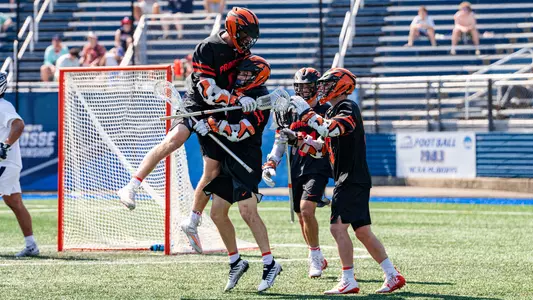
It was Princeton and Yale in the NCAA quarterfinals this past Saturday at Hofstra, and there was more than heat and humidity in the air. If you listened closely, you could almost hear the words that Bill Tierney has spoken so many times: “The quarterfinals are the pressure round.”
If he’s said it once, he’s said it, well, 16 times as the head men’s lacrosse coach at Princeton and then seven more times since he took over the program at Denver. That’s 23 times he’s taken a team to the quarterfinals, the last hurdle to clear before heading off to Championship Weekend.
“I completely agree with that,” says Trevor Tierney, who knows a thing or two about the quarterfinals, having played in three of them as a Tiger and then coached in five more with his father. “I always felt that way as a player and while I was coaching in college. It’s the biggest battle. Everyone wants to get to play in the Final Four. The quarterfinals. They’re the most emotional.”
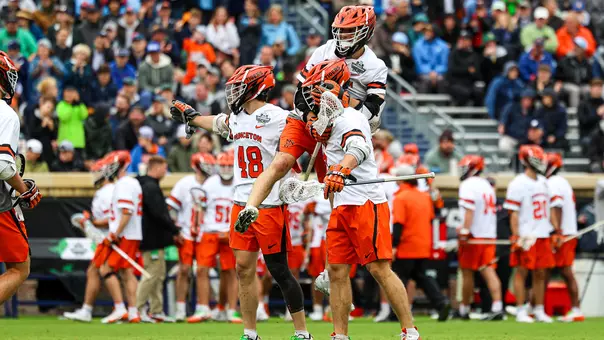
The 2022 Tigers added to the lore that is the Princeton men’s lacrosse quarterfinal history with their 14-10 win over the Bulldogs, advancing them to the national semifinals this coming Saturday against top-seeded Maryland. It’s the pinnacle, the biggest stage in lacrosse. It’s why 10 seniors took last year off, to make this run. It’s what every practice and every lifting session and every early morning run is about. Get to the Final Four.
“Once you’re there,” Trevor Tierney says, “it’s anybody’s to take. But you have to get there.”
To get there, these Tigers had to end a six-game losing streak to Yale, including all four meetings since Matt Madalon became the head coach. Adding in the pressure to get to Hartford, Princeton’s win was one of the best moments of any team in program history in the quarterfinal round.
It is not alone in magical moments, though.
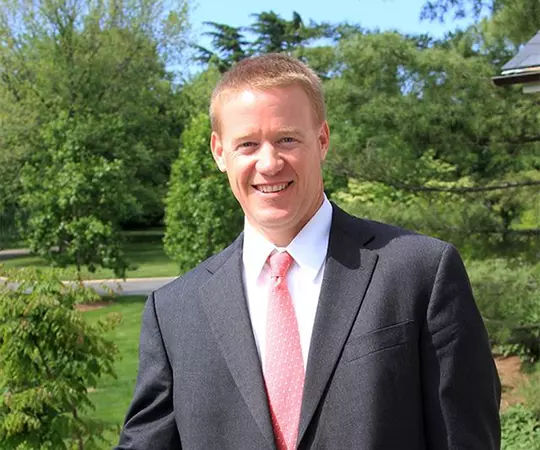
Scott Conklin knows all about magic in the quarterfinals. He scored one of the biggest goals Princeton has ever had, in ovetime to defeat Johns Hopkins in Palmer Stadium in the 1994 quarterfinals.
The 1992 Princeton team won the first of the program’s six NCAA championships, and the 1993 made it back to Championship Weekend before falling to Syracuse. The 1994 team, one that featured a senior class that included Hall of Famers Kevin Lowe and Scott Bacigalupo, played to accomplish two goals — to prove that 1992 was no fluke, and to go out on top.
By nightfall on Memorial Day, Lowe had scored an overtime game-winner and Bacigalupo had won his second Most Outstanding Player Award. None of that happens without what Conklin, a junior on that team, did in the quarterfinal round.
The 1994 quarterfinal game featured six lead changes and seven ties. It was an 11-10 Blue Jay lead with just over a minute to play when Conklin tied it, and he won it overtime on a wild sequence. It started with a Bacigalupo save at one end and then a mad scramble near midfield on a clearing attempt. When the sticks and bodies finished jostling the ball, it squirted past everyone to Conklin, who was suddenly one-on-one with the Hopkins goalie.
Palmer Stadium was a horseshoe stadium, and Conklin was heading towards the open end. He deposited the game-winner and then kept running, maybe not quite all the way to Jadwin Gym, and when he finally stopped and turned around, he was mobbed by his teammates.
“I was in the right place at the right time,” Conklin says. “The ball popped right to me. We were just talking about this, about how many breaks you need to win a championship. That particular play — I was just in the right place at the right time.”
Princeton went on to defeat Brown and Virginia in the Final Four, making it two titles and stamping the Class of 1994 as one of the best to ever play.
“We were down 6-3 to Hopkins,” Conklin says. “You start thinking ‘Is this the end of our season.’ We had started the season so well, and I think we were pretty big favorites against Hopkins. Getting to the Final Four is an achievement. The quarterfinal game is always a lot of pressure. I wasn’t sure how to react. I think I just threw my stick up in the air.”
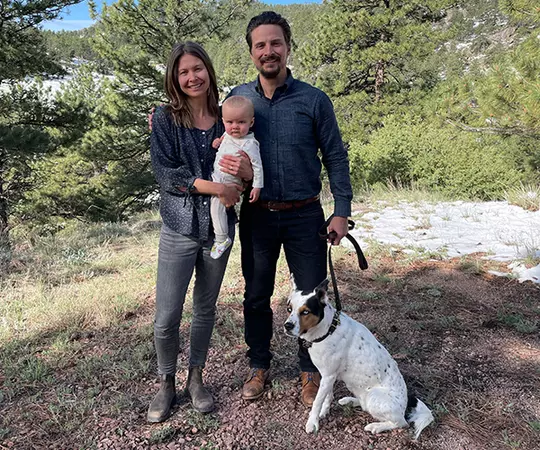
Conklin knew he’d play a big role in that game one way or another. Trevor Tierney? As a freshman backup goalie, he thought he’d be a spectator for the 1998 quarterfinal at Hofstra against Duke. He actually was, at least for the first 20 minutes.
“That year was a tough year for me, Tierney says. “As a freshman, I was just starting to prove to people that I deserved to play at that level. I think there were a lot of naysayers who thought I’d gotten there just because of who my dad was. As it turned out, that game was the first opportunity to prove who I was as a player on that level.”
Princeton had won the 1996 and 1997 NCAA titles, going unbeaten in the 1997 season for good measure. There was a Week 2 loss at Virginia in 1998, but the Tigers were 40-2 in those three seasons heading into that quarterfinal game.
Just like in 1994, Princeton had one of the greatest classes of all time, and perhaps the greatest attack unit ever, with Jon Hess, Chris Massey and Jesse Hubbard, who combined for 618 points in four years and 127 points in 11 NCAA games. Their destiny would be to win three straight NCAA titles, and with Maryland’s win over Virginia in this year’s quarterfinals, those teams remain the last to win three straight.
Again, though, the quarterfinals were brutal. Duke led 8-4 midway through the second quarter, and Tierney (Bill) was faced with a tough decision. And so, with his legendary senior class on the verge of not making it to another Championship Weekend, he went with his gut.
“He turned around and told me to get ready,” Trevor says. “That was it. I didn’t even get a chance to warm up. There was no time for that.”
Tossed into the game, Tierney allowed only one goal in the final 37:58, making six saves but mostly importantly stabilizing the situation as Princeton crawled all the way back to win 11-9. Tierney was back to being the backup for the Final Four, and the goalie who was pulled, Corey Popham, was the Most Outstanding Player. The Class of 1998 had its nearly perfect legacy. None of it happens without Tierney in the quarterfinals.
“I was so happy those guys didn’t go out that day against Duke,” he says. “They were such great leaders, all of them. I didn’t want it to end there for them.”
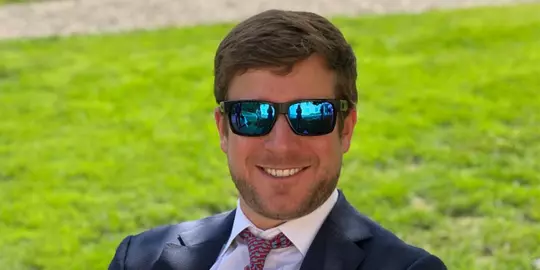
Tierney’s performance against Duke would be up there as the most legendary individual moments in quarterfinal history, were it not for what happened in 2004. What Ryan Boyle did on another sweltering day, this time at Virginia, is still spoken about in reverent tones by his teammates.
“That was just one of the greatest players of all time, and also the most gritty guy I ever played with, just making it his legacy to win a game for us,” says Jason Doneger.
Princeton was playing Maryland, who was the clear favorite. The Tigers fought most of the way but trailed 8-6 with a little more than two minutes to play. Boyle was matched against Maryland’s Chris Passavia, who was the best defenseman in the country that year, and the matchup through 58 minutes favored Passavia, who had held Boyle to a goal and an assist.
Then it all flpped on a dime.
“It all happened so fast,” says Peter Trombino, then a freshman attackman. “It was like three minutes of real time. It all happened in fast-motion.”
First Boyle isolated Passavia behind the cage, dodged and rolled back for a goal to cut it one. Then Princeton won the face-off and got three shots off, two that were saved and one, from Doneger (who had two goals in the game) that hit the pipe. Now with the ball, Maryland didn’t try to run it out, and instead Joe Walters took a shot that Dave Law stopped. With one last chance, Princeton cleared it and had a shot go wide, triggering a restart with 17 seconds left.
“"There's always more time than you think," Boyle said after the game. "When you're desperate, you can get a lot of shots off. You never want to have to make an all-or-nothing move, but at the end, I had no choice. Luckily, it was all, not nothing."
It was all, definitely. Boyle once again took Passavia one-on-one, and once again he beat him, tying it at 8-8 with 12 seconds left. The game went to overtime with Maryland a man up and with the ball after a push on the face-off after the tying goal, but the Terps turned it over and the Tigers cleared. Again it went behind to Boyle. Again he took Passavia one-on-one.
“I was watching things unfold and thinking ‘good, Ryan has the ball again,’” Trombino says. “He was seeing the field. He was making things happened. I just popped out to give him room. I’m not sure if it was designed that way, but that’s what I did.”
This time, when Boyle got topside on Passavia again, the entire Maryland defense reacted. Instead of going to the cage, Boyle threaded it to Trombino, who ripped it in from about 10 yards out.
“It was the best feeling ever,” Trombino says. “But really I had the easy part. It was Ryan’s heroic effort that made it all happen. I don’t think there’s ever been a more exciting finish or incredible effort by one person in such a big game. He got us there. To be able to finish was a dream come true, but that was all Ryan.”
The 2004 team fell 8-7 to Navy in the semifinal, but they got to Championship Weekend. That’s the prize in the quarterfinals, and the gulf between winning and losing in that round is huge.
“You have to get past the quarterfinals,” Trombino says. “It’s so easy to lose that game, and there’s so much on the line.”
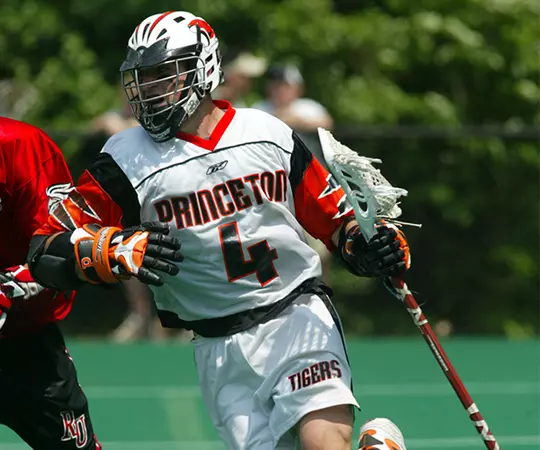
The 2022 Tigers will have a tall task Saturday in Hartford, taking on the unbeaten Terps. The point is that they’ve made it there. Doneger was at the game at Hofstra. Trombino and Conklin were on campus at Reunions watching it. Tierney also saw the game on TV, from his home in Colorado.
“I’m so fired up for them,” Doneger says. “They did such a great job, kept it together, got those really big goals every time Yale cut it to two.”
Doneger has been active with the Friends of Lacrosse board, and he knows what all of this has meant to the alums, as well as the current team.
“It was great to see all those guys who graduated in the last 10 years be there like they were,” Doneger says. “They have been exceptionally supportive of the team. They’re so fired up for the team. It’s hard to understand the secret sauce of why a team gels, but it’s so important. Winning becomes a lineage. The teams that win know what it takes. They can share the winning formula. When you’re trying to do it for the first time, or the first time in a long time, it’s a lot harder. It’s so impressive what these guys have done, especially after those last two losses to end the regular season. I couldn’t be happier for them, and for Coach [Matt] Madalon.”
And now what?
“Now?” Conklin asks. “Now you go for it. You’re there. You have a tall task of course. But you enjoy the moment. I’ve watched every game this year. I’ve been so impressed with their effort and hustle and energy. They just bring it. If they do that again, they have as good a chance as anyone else there. That’s the thing. You have to get there.”
And they did. Dramatically. Historically. In doing so, they’ve added to the legacy of a program that has had more than its share of great moments in this, the pressure round.
Now it’s off to the Final Four.
— by Jerry Price