


Princeton University Athletics
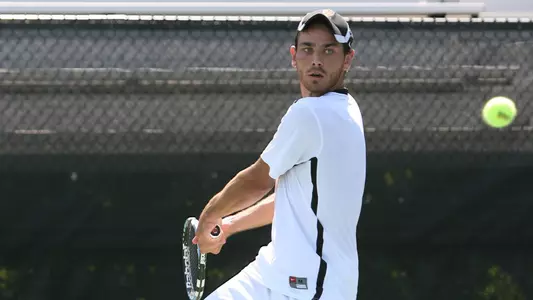
Three-Time Ivy POY Pecotic '13 Heads Back to School
July 11, 2017 | Men's Tennis
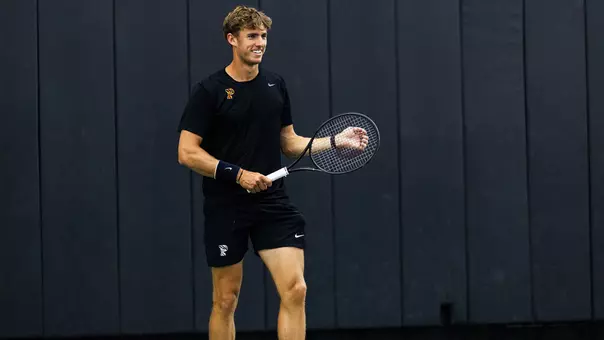
Still the only three-time Ivy League tennis Player of the Year in league history, men's or women's, Matija Pecotic '13 has played in each of the four Grand Slam tournaments during his professional career. Now, he'll be after his MBA.
He played in tournaments in Turkey, Croatia, Serbia, Georgia, Qatar, China, Thailand, Israel, Vietnam, Nigeria, Great Britain, Egypt, Taiwan, Canada, France and Australia along with events in the U.S. in pursuit of a spot in the world's top 100-ranked players. That's where players can make a living, Pecotic said, and there are more than 14,000 players registered to chase that status.
"Turning professional turned out to be a unique entrepreneurial opportunity for me because in pursuing a career as a professional tennis player, I had become CEO of my own international brand and company," Pecotic said. "Tennis players are self-employed and are run like small companies. Not only was I running the small company, but I had to play every single role in order to be successful. I was responsible for raising funds, interviewing and hiring coaches and trainers, creating a website, planning budgets, handling investor relations, looking for endorsement deals, planning travel schedules, and all the while focusing on my own tennis game. Just as I had in college, balancing my demanding academic schedule and requirements along with my team responsibilities and tennis goals, I ran a tight schedule and optimized each hour."
Though it's an individual sport, Pecotic wasn't alone on his journey. Employing a skill that will be useful as he goes forward in business, Pecotic found an investor to help finance his travel to events around the world. He had a home base with the CourtSense club in New Jersey, and he had his coaches, among them Princeton head coach Billy Pate and former head coach Glenn Michibata, among the top doubles players in the world during his career, to lean on throughout.
"In many ways Princeton made existing on the tour and being successful that much easier," Pecotic said. "I had world-class coaching for four years and connected with great people that made it possible to pursue this goal."
Pecotic's tenacity in pursuing both his tennis objectives and those in life was something Pate recognized when the Tiger coach took over the program ahead of Pecotic's senior year.
"Matija was a model student-athlete and worked incredibly hard managing his time at Princeton while having the passion and desire to pursue a pro career," Pate said. "Without question, he is a fierce competitor and is a special talent. That is exactly what we are trying to identify in recruiting and it shows that you can get an Ivy education without sacrificing your professional tennis goals. He has represented Princeton well and has been a great ambassador for our program."
Pecotic said his Princeton experienced didn't just help with time management, but also with his advancement up the rankings.
"I surpassed many players who had been on tour for a few years simply based on some basic lessons about discipline and work ethic that were taught to us at Princeton," Pecotic said. "It takes many players on average 5-7 years of full-time tour life to crack the top 100. Given that I was starting on the tour at 24, I gave myself three years to complete that goal and I set several annual ranking goals, among them to be in the top 500 in the first year, top 300 in the second and top 100 by the end of the third."
It is, of course, an extremely competitive environment, and skill is only one of the aspects needed to achieve tennis success.
"It is an extreme test of mental fortitude and only the strongest survive," Pecotic said. "You need to accept that you will do the same exercises over and over again, the same sprints, the same band work, the same adductor exercises. The tour has gotten so physical that it is almost impossible to just get to a Grand Slam without having a world class tennis physique and top conditioning. You need to always work on your weapons and understand what it is that you do well and that wins you points. The tour has become so global that you must travel to a different country almost every week or two in order to keep up with the tournament schedule. In addition to the travel, you need to maintain a good diet with sometimes unusual food choices and availability. Every tennis player needs to rise through the ranks and come through the smaller events in order to reach the coveted four Grand Slams. If you over-analyze and try to compare your surroundings at the lower events to the bigger events, you might feel as though the goal is too far away or that the top 100 players are in some elite group that can never be reached. The reality is that many players who are ranked in the top 300 are closer to the top than they think, and I have seen many players that were good enough to be in the top 50 who never believed they could be there, and consequently never made it."
Pecotic battled through injury through much of 2016 before making a comeback to qualify for the U.S. Open, but the ever-present decision on whether to continue his pursuit and all the costs that go into it, financial, physical and otherwise, remained.
"I understood that I would need to be ranked in the top 30 to 50 for 5-7 years in order to come away from the sport with some profit, and hanging around the courts for the next 5-7 years would have been great fun but it might have effected my possibility to transition to a second career. I thought retiring at 27 would be better than retiring at 35. Although it was an extremely hard decision, it was the right one and after the Australian Open, I put the rackets down, moved back to New Jersey, prepared for the GMAT and began interning in New York."
Pecotic's Princeton experience helped him on tour, and now he has his pro tennis experience to help him in his future career.
"I thought it made sense to pursue an MBA and formalize my lessons from the tour," Pecotic said. "I wanted to remain on the East Coast and I was fortunate enough to have been accepted to Harvard Business School, were I will be starting in the fall."
It's a great opportunity for Pecotic, but it meant giving up the chance to keep the pursuit of a top-100 tennis career going. Pecotic acknowledges the what-if thoughts are there, even as he prepares to move forward.
"I really believed that I could have made it, but the real question at this point in my career is, at what cost?" Pecotic said. "Unless I was guaranteed to make the top 10 or win a Grand Slam, I am not sure I would have been happy being 88 in the world at 32. This is the reality of the sport. Still, as an athlete and tennis player my whole life, it is hard to let go of the tennis identity, but I understand that I am making the right decision."
"I will always be proud of my achievements, to have flown the Princeton flag wherever I went, and to have made it to the four Grand Slams," Pecotic said. "I have smelled the Wimbledon grass, and slid on the French Open clay, baked under the Melbourne sun and played at the U.S. Open in the loudest tournament in the world. I have formed tremendous friendships, traveled the world and fought in every single match that I played, pursuing this crazy goal of being in the world's tennis elite. I did not make it, but I came pretty darn close, and I will carry the lessons from this chapter in everything that I do in the future, beginning with Harvard Business School this fall."
Pecotic most recently made it to London as part of Wimbledon qualifying, concluding a year that saw him make the second round of qualification at Roland Garros, the first round of qualifying at the Australian Open, and the first round of qualifying at the most recent U.S. Open last September. His July 3 ATP world ranking was 483rd, keeping him in the top 600 in every ranking since February 2015. He rose from an initial ranking of 1,677 in October 2013 to a top ranking of 206 in November and December 2015.He played in tournaments in Turkey, Croatia, Serbia, Georgia, Qatar, China, Thailand, Israel, Vietnam, Nigeria, Great Britain, Egypt, Taiwan, Canada, France and Australia along with events in the U.S. in pursuit of a spot in the world's top 100-ranked players. That's where players can make a living, Pecotic said, and there are more than 14,000 players registered to chase that status.
"Turning professional turned out to be a unique entrepreneurial opportunity for me because in pursuing a career as a professional tennis player, I had become CEO of my own international brand and company," Pecotic said. "Tennis players are self-employed and are run like small companies. Not only was I running the small company, but I had to play every single role in order to be successful. I was responsible for raising funds, interviewing and hiring coaches and trainers, creating a website, planning budgets, handling investor relations, looking for endorsement deals, planning travel schedules, and all the while focusing on my own tennis game. Just as I had in college, balancing my demanding academic schedule and requirements along with my team responsibilities and tennis goals, I ran a tight schedule and optimized each hour."
Though it's an individual sport, Pecotic wasn't alone on his journey. Employing a skill that will be useful as he goes forward in business, Pecotic found an investor to help finance his travel to events around the world. He had a home base with the CourtSense club in New Jersey, and he had his coaches, among them Princeton head coach Billy Pate and former head coach Glenn Michibata, among the top doubles players in the world during his career, to lean on throughout.
"In many ways Princeton made existing on the tour and being successful that much easier," Pecotic said. "I had world-class coaching for four years and connected with great people that made it possible to pursue this goal."
Pecotic's tenacity in pursuing both his tennis objectives and those in life was something Pate recognized when the Tiger coach took over the program ahead of Pecotic's senior year.
"Matija was a model student-athlete and worked incredibly hard managing his time at Princeton while having the passion and desire to pursue a pro career," Pate said. "Without question, he is a fierce competitor and is a special talent. That is exactly what we are trying to identify in recruiting and it shows that you can get an Ivy education without sacrificing your professional tennis goals. He has represented Princeton well and has been a great ambassador for our program."
Pecotic said his Princeton experienced didn't just help with time management, but also with his advancement up the rankings.
"I surpassed many players who had been on tour for a few years simply based on some basic lessons about discipline and work ethic that were taught to us at Princeton," Pecotic said. "It takes many players on average 5-7 years of full-time tour life to crack the top 100. Given that I was starting on the tour at 24, I gave myself three years to complete that goal and I set several annual ranking goals, among them to be in the top 500 in the first year, top 300 in the second and top 100 by the end of the third."
It is, of course, an extremely competitive environment, and skill is only one of the aspects needed to achieve tennis success.
"It is an extreme test of mental fortitude and only the strongest survive," Pecotic said. "You need to accept that you will do the same exercises over and over again, the same sprints, the same band work, the same adductor exercises. The tour has gotten so physical that it is almost impossible to just get to a Grand Slam without having a world class tennis physique and top conditioning. You need to always work on your weapons and understand what it is that you do well and that wins you points. The tour has become so global that you must travel to a different country almost every week or two in order to keep up with the tournament schedule. In addition to the travel, you need to maintain a good diet with sometimes unusual food choices and availability. Every tennis player needs to rise through the ranks and come through the smaller events in order to reach the coveted four Grand Slams. If you over-analyze and try to compare your surroundings at the lower events to the bigger events, you might feel as though the goal is too far away or that the top 100 players are in some elite group that can never be reached. The reality is that many players who are ranked in the top 300 are closer to the top than they think, and I have seen many players that were good enough to be in the top 50 who never believed they could be there, and consequently never made it."
Pecotic battled through injury through much of 2016 before making a comeback to qualify for the U.S. Open, but the ever-present decision on whether to continue his pursuit and all the costs that go into it, financial, physical and otherwise, remained.
"I understood that I would need to be ranked in the top 30 to 50 for 5-7 years in order to come away from the sport with some profit, and hanging around the courts for the next 5-7 years would have been great fun but it might have effected my possibility to transition to a second career. I thought retiring at 27 would be better than retiring at 35. Although it was an extremely hard decision, it was the right one and after the Australian Open, I put the rackets down, moved back to New Jersey, prepared for the GMAT and began interning in New York."
Pecotic's Princeton experience helped him on tour, and now he has his pro tennis experience to help him in his future career.
"I thought it made sense to pursue an MBA and formalize my lessons from the tour," Pecotic said. "I wanted to remain on the East Coast and I was fortunate enough to have been accepted to Harvard Business School, were I will be starting in the fall."
It's a great opportunity for Pecotic, but it meant giving up the chance to keep the pursuit of a top-100 tennis career going. Pecotic acknowledges the what-if thoughts are there, even as he prepares to move forward.
"I really believed that I could have made it, but the real question at this point in my career is, at what cost?" Pecotic said. "Unless I was guaranteed to make the top 10 or win a Grand Slam, I am not sure I would have been happy being 88 in the world at 32. This is the reality of the sport. Still, as an athlete and tennis player my whole life, it is hard to let go of the tennis identity, but I understand that I am making the right decision."
Tuesday, September 02
Tuesday, June 04
Wednesday, June 22
Monday, June 06