


Princeton University Athletics
Players Mentioned

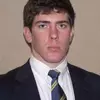





New Wrestling Coach Chats Prior To 2006-07 Season Opener At Buffalo
November 15, 2006 | Wrestling
Head coach Chris Ayres has seen wrestling at its best during his years at Lehigh, both as an undergraduate All America selection and as an assistant coach with the perennial EIWA contender Mountain Hawks. He brings a wealth of experience and an abundance of enthusiasm to Princeton, where he will begin his head coaching career this Saturday at Buffalo (1 p.m.). Prior to beginning his 2006-07 season, Ayres sat down with GoPrincetonTigers.com and talked about himself, his coaching style and his views for the present and future of Princeton wrestling.
1) How old were you when you started wrestling, and what made you so passionate about it?
I was 9 years old when I started wrestling. Wrestling, like many of the Olympic sports, is driven by family involvement. My father, a former wrestler, exposed me to the sport at an early age and I immediately fell in love with it.
My passion developed because wrestling seemed to just fit my personality. As long as I can remember I have been a very competitive person, and of all the sports I competed in, I got the most gratification from wrestling. I liked the fact that the fate of a match was solely in my hands, and that I didn't have to rely on anyone else to determine whether I won or lost. Also, in wrestling you don't have to be a gifted athlete to be successful. I knew that if I worked hard I could be good, no matter what my physical limitations. I think I am more passionate about working hard and competing than anything else; wrestling was just the sport that best suited me.
2) What were some of your favorite memories as an undergraduate wrestler at Lehigh?
In terms of individual achievement, it would be becoming an All-America selection my senior year. In terms of team, my best memory is kind of a funny one. My freshman year we were wrestling Syracuse and one of our key wrestlers got hurt and we were forced forfeit a weight. We got a few key pins during the match, but when it came to the heavyweight match we still needed a pin to win the match. Unfortunately, earlier in the year our All-American heavyweight tore a ligament in his knee and Coach Strobel was forced to put an advertisement in the school newspaper requesting any big athletic students come out for the wrestling team. A lacrosse player, Travis Jackson, with very little wrestling experience decided to answer the ad. So things looked bad for us in the dual and everyone in the stadium knew this kid was not truly a wrestler. What they didn't know that the highly touted Syracuse heavyweight also got hurt and the wrestling student manager was filling in for him. The match was a crazy one, but in the end Travis somehow ended up on top of the Syracuse opponent, gaining the fall. Students stormed the mat and hoisted Travis up on their shoulders. It was a memorable match.
3) Did you always want to be involved in coaching?
No. I was a business major in college and figured I would just go and try to make a lot of money when I graduated. After an internship my junior year I decided that sitting in a cubicle was not for me. In hopes that I could teach and coach, I pursued a Masters degree in education following my senior year. While I was getting my Masters at Lehigh an assistant coach position opened up and the rest is history. I feel I am doing exactly what I was meant to do and consider myself one of the luckiest people in the world. I am one of the fortunate people who get paid for what they love to do.
4) What did you learn from Greg Strobel about leading a program?
Coach Strobel has influenced my basic coaching philosophy and general outlook on life a great deal and it would be impossible to outline everything I have learned from him in this interview. I guess the most important thing I learned from him is to have a great attitude. In my time with Coach Strobel as an athlete and a coach, I rarely saw him without a smile. He had a genuine love for both coaching and life; a love that I have adopted. No matter how poorly things were going he always found a way to keep a great attitude and this attitude was evident from the beginning. My freshman year we were shut out by his alma Mater, Oregon State, and as we sat in the locker room waiting for his return from interviews we were extremely nervous. It was his first year as head coach and we had no idea how he would react. We expected to get a verbal lashing, but instead he came into the locker room and said, “well boys it could have been worse ... you all could have been pinned." He understood that we felt bad enough and yelling at us would only make things worse. Even though things were just about as bad as they could be from a coaching standpoint, he found a way to stay positive. I'm sure I will have my share of tough times as a coach here, but I will always maintain a positive attitude.
5) What attracted you to Princeton?
For a private small school to be successful in college wrestling the program must have: strong alumni and administrative support, the ability to attract the best student-athletes, the ability to attract and retain great assistant coaches, and top-rate facilities. At the conclusion of my interview process I was fairly sure that Princeton had all of these essentials in place, but I was still a little uncertain entering the job in July.
Now that I have been here for four months, I couldn't be more pleased with my decision. I am fortunate to have some of the most passionate and generous alumni in country and am enjoying working with them on a near daily basis to make this program the best it can be. Their continued support will be one of the key factors to this programs success.
Working with the administration in the athletics department has also exceeded my expectations. Everyone has a positive outlook and will do everything within their power to make all the Princeton sports programs the best they can be. The pursuit for excellence extends not only from high level administrators, but from other coaches, support staff, and employees. Everyone takes great pride in working for Princeton athletics, and that attitude is contagious throughout the department.
The addition of Troy Letters and Derek Zinck, along with the return of Joe Jamison, proved that Princeton can attract the best young coaching talent in the nation. I couldn't be more pleased with this staff and their efforts during the pre-season were outstanding. The current team is fortunate to have these coaches who care so deeply about their development.
In relation to recruiting I knew Princeton could attract the best talent because Princeton simply sells itself. I rarely have to talk too much about the education that a recruit will receive here, because they already know. In my opinion, Princeton is quite simply the best undergraduate school in the country. My job is to get recruits to believe in my vision for the wrestling program. When I get recruits to see where the program will be in the future, they have a hard time saying no to the Princeton experience.
Finally, the facilities are some of the best in the country. We have everything we need to prepare individuals to be All-Americas and national champions.
6) What are your basic coaching philosophies, both about wrestling and dealing with young men?
The parallels between being successful in wrestling and being successful in life are extremely similar, but often overlooked when individuals are in the process of being a student-athlete. One of my main goals is to help athletes make the connection that what they learn in wrestling can be applied to every aspect of their life. I tell my athletes that the wrestling room is one of the best classrooms on campus, because they are developing their character. The individuals on this team will most likely be leaders in whatever field they choose and my hope is that what is taught throughout their wrestling career at Princeton will help them lead effectively. I am as excited to see what these young men do after wrestling, as I am to see what they do with wrestling.
In terms of training athletes I take a very individualistic approach to coaching. Simply put, I look at athletes' strengths and try to make them better, while eliminating weaknesses. There are a lot of ways to win a wrestling match, and to try to force everyone to wrestle like I did would be ineffective and, quite frankly, boring. I believe that there are some basic things every wrestler needs to know, but beyond those necessities, I push my athletes to be creative within their own style.
I also believe in leading by example. If I don't do everything I can to make this program the best it can be, I can't really ask my athletes to do the same. I don't believe in leading with words, I believe in leading with actions.
7) Has it been a struggle coming from a strong program like Lehigh to a program that needs to be rebuilt?
No. I enjoy challenges, especially when people tell me something can't be done. Coming out of high school I didn't place in the high school state tournament and not many people believed me when I said I was going to wrestle Division I at Lehigh. I ended up having a pretty good career and I proved all the non-believers wrong. I will do the same thing here. I truly believe Princeton wrestling will eventually be one of the best programs in the country.
I love the task set before me. If I was handed a national championship team it wouldn't be as rewarding. I will work every day to make each of the wrestlers on my team the best they can possibly be. If I do this, while recruiting the best possible student athletes in country, this program will be successful.
8) What have been your thoughts about this first preseason?
Initially I was very nervous about entering the preseason considering I really knew nothing about the kids on the team. My main fear was that they would not be hard workers and would quit once we started training at the pace I felt was necessary to re-build this program. Those fears were laid to rest once we started working with the team. Since the preseason began the wrestlers have done whatever was asked and more. Because of the work they have put in the team is looking great and we are extremely excited about where the team is at this point in the season. We still have a lot of work to do, but I believe we are improving at an incredible pace and that's all we can ask for.
9) What should Princeton fans expect from a Chris Ayres-coached squad this season and for years to come?
Fans can expect that every Princeton wrestler will wrestle aggressively for 7 minutes, using high percentage scoring techniques and effective match strategies. I preach to my wrestlers that the goal of every match, win or lose, is to make our opponents never want to wrestle a Princeton wrestler again. Fans can also expect to see improvements throughout the year from each wrestler, culminating with peak performances in the conference and NCAA tournaments. I am very diligent in design and execution of the training plan across the whole season to ensure that the Princeton wrestlers will be prepared in March.
PROBABLE PRINCETON LINEUP • Nov. 18, 2006 at Buffalo
125 Nikhil Pereira-Kamath (Fr., Newton, Mass.)
133 Jeffrey Kirkchick (Fr., Dover, Mass.)
141 Danny Scotten (So., Burlington, N.J.)
149 Jesse Palermo (Sr., Potsdam, N.Y.)
157 Marty Everin (Jr., Ann Arbor, Mich.)
165 Alex Enriquez (So., Tampa, Fla.)
174 John Clore (Jr., Richmond, Vir.)
184 Gordon Scharf (So., Vernon Hills, Ill.)
197 Zach Morse (Fr., Merion, Pa.)
HWT Kris Berr (Sr., Collingswood, N.J.)