


.png&width=24&type=webp)


Princeton University Athletics

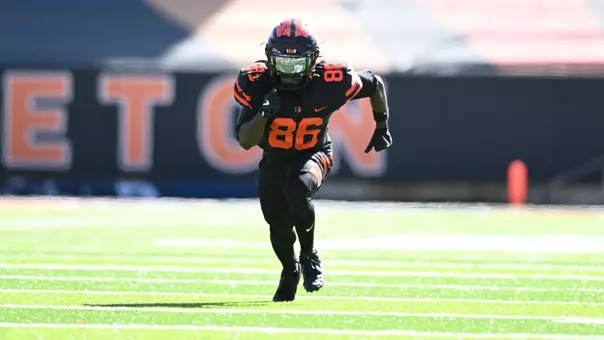


The New Princeton Stadium
August 09, 1999 | Football
Princeton University's Palmer Stadium, the second-oldest football stadium in the United States, was torn down last summer. The stadium was built in a four-month period of 1914 and was the home for Princeton football and track and field for 82 years.
The new facility, Princeton Stadium, is being built on the same site as Palmer, and will have separate venues for track and football. It is scheduled for completion in time for the 1998 football season.
"It's a once-in-a-lifetime opportunity to be the head coach of a team that plays in its new stadium," said Princeton head football coach Steve Tosches. "The historic slate is wiped clean, and you get to write the first chapters of a new one. But that doesn't mean we won't miss Palmer Stadium. There have been many great moments in that stadium, and I'm proud to have been a part of it."
Palmer Stadium opened (on Oct. 24, 1914) and closed (on Nov. 23, 1996) with football games between Princeton and Dartmouth. In all Princeton played 461 football games in the stadium and had a record of 283-161-17.
Palmer also played host to memorable moments in many other sports, most notably track and field. The end of the stadium ensures that Jesse Owens will forever have the Palmer record for the long jump, which he set in 1936. Other Olympians to have competed at Palmer include Al Oerter, Edwin Moses and Lynn Jennings.
The new stadium will have a smaller seating capacity of 30,000, as compared with Palmer's 45,750. Unlike Palmer there will be seating in the new stadium's east end zone, though there will be a wall-building attached to the structure on three sides to simulate Palmer's traditional horseshoe design.
A common structure in the east end zone will join the two facilities and have seating for football and track and field, thus creating the new athletic complex.