


.png&width=24&type=webp)


Princeton University Athletics

Players Mentioned

F/D
/ Women's Soccer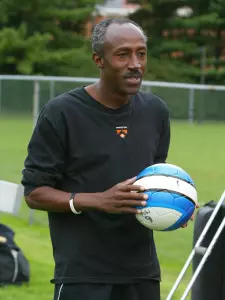
Women's Soccer's Celestin Continues on Road to Recovery
October 24, 2007 | Women's Soccer
Last Friday, Ron Celestin boarded the Princeton women's soccer bus headed for Harvard.
It doesn't seem like it should be a big deal. Celestin has been traveling with the team as an assistant coach for 13 years now, joining the staff following the hiring of head coach Julie Shackford in 1995.
But what makes it a big deal is what happened the Tuesday following Princeton's return from a tournament at Notre Dame in mid-September. Following practice, Celestin collapsed in the training room.
"I guess in a lot of ways I was fortunate to have been on campus next to the medical staff," Celestin said. "I remember getting into the ambulance and thinking about how I wasn't able to play pickup soccer that day."
After being in the game so long, perhaps it was only natural that soccer was on Celestin's mind, even at such a critical time.
"I was stunned," Shackford said. "It was very difficult to see somebody who embodies such strength and courage fall ill. Selfishly, I was nervous because Ronnie has been such a great friend and advisor to me. I felt really alone without him at practice and on the bench. He has always helped balance me and is one of those friends and colleagues not afraid to play devil's advocate or see things from a completely different perspective."
Upon arrival at the Princeton Medical Center, it was determined that Celestin had suffered a stroke. He remained in the hospital for a week and a half, through three Princeton victories, before being discharged on Sunday, Sept. 30, the day after Princeton opened Ivy League play with a 2-1 win at Dartmouth.
"There was a great big void. Everyone felt it," Shackford said of Celestin's absence. "He made a remarkable recovery and we are beyond thrilled to have him back. I guess when I was in the training room and he was being wheeled out yelling, 'Shacks, why are you letting them do this?,' I should have known that his recovery would be nothing short of spectacular. That's just how Ronnie is."
Though he was only released from the hospital two days earlier, Celestin made it to Princeton's next game, a home match against Rutgers. Again, Princeton won. The following weekend at Brown, Celestin's influence was felt again.
"Ronnie sent me a text that he had a thought that Allison Williams was going to have a big day and that I should put her up top," Shackford said of the Oct. 6 game against the Bears.
Williams, a junior defender, had yet to score a goal in her Princeton career. That day, she scored in Princeton's 4-1 win.
Celestin was on the bench for Princeton's Ivy League home opener against Columbia Oct. 13 but didn't make the midweek trip to Lehigh. Last Friday was his first time on a Princeton bus since returning from Notre Dame.
Though his speech is quick as ever and he has been out of the hospital for a few weeks now, Celestin hasn't yet regained all the freedom he had prior to the stroke. Driving is out of the question for the moment and he has yet to return to his full-time job as an elementary physical education teacher in the Princeton school district.
"I have to pace myself and get my strength back. I still don't feel totally ready. I am taking small baby steps getting back to normal," he said. "I go to see my daughters (Chantal, 15, and Ciara, 12) play and I swing by the university. When I go back to teaching, I want to go back full-time. Teaching is a much larger load. I want to be sure I have the energy to give back to the kids."
Ciara traveled with the team to Harvard to keep an eye on her dad as he makes his way back. Though he is on the sidelines, Celestin said there is much more to coaching that he hasn't yet been able to begin again.
"Now I feel like I want to be part of the soccer decision making," Celestin said. "I want to be able to make suggestions and I am starting to feel like that part is coming back to me. For now I am just having conversations with the coaching staff and reaching out to players here and there."
"When you've been doing something for so many years, you want to be able to do it full-time, so I have to pace myself," he added.
News of Celestin's stroke passed only by word of mouth. But the volume of contact Celestin received during his hospital stay and recovery shows the reach he has had.
"A number of the alums I hadn't heard from in a while have e-mailed or called," Celestin said. "The support I've gotten from the whole community has helped me move along faster."
No doubt the recent spate of wins the Tigers have had has eased his recovery too. The next few weeks will be a critical time for both Celestin and the team he loves to coach. The Tigers will have important Ivy League games that decide the fate of their season, and Celestin will have doctor appointments to appraise his return to normal.
As much as Celestin is invested in Princeton soccer, it seems that each can do a lot to help the other along.
It doesn't seem like it should be a big deal. Celestin has been traveling with the team as an assistant coach for 13 years now, joining the staff following the hiring of head coach Julie Shackford in 1995.
But what makes it a big deal is what happened the Tuesday following Princeton's return from a tournament at Notre Dame in mid-September. Following practice, Celestin collapsed in the training room.
"I guess in a lot of ways I was fortunate to have been on campus next to the medical staff," Celestin said. "I remember getting into the ambulance and thinking about how I wasn't able to play pickup soccer that day."
After being in the game so long, perhaps it was only natural that soccer was on Celestin's mind, even at such a critical time.
"I was stunned," Shackford said. "It was very difficult to see somebody who embodies such strength and courage fall ill. Selfishly, I was nervous because Ronnie has been such a great friend and advisor to me. I felt really alone without him at practice and on the bench. He has always helped balance me and is one of those friends and colleagues not afraid to play devil's advocate or see things from a completely different perspective."
Upon arrival at the Princeton Medical Center, it was determined that Celestin had suffered a stroke. He remained in the hospital for a week and a half, through three Princeton victories, before being discharged on Sunday, Sept. 30, the day after Princeton opened Ivy League play with a 2-1 win at Dartmouth.
"There was a great big void. Everyone felt it," Shackford said of Celestin's absence. "He made a remarkable recovery and we are beyond thrilled to have him back. I guess when I was in the training room and he was being wheeled out yelling, 'Shacks, why are you letting them do this?,' I should have known that his recovery would be nothing short of spectacular. That's just how Ronnie is."
Though he was only released from the hospital two days earlier, Celestin made it to Princeton's next game, a home match against Rutgers. Again, Princeton won. The following weekend at Brown, Celestin's influence was felt again.
"Ronnie sent me a text that he had a thought that Allison Williams was going to have a big day and that I should put her up top," Shackford said of the Oct. 6 game against the Bears.
Williams, a junior defender, had yet to score a goal in her Princeton career. That day, she scored in Princeton's 4-1 win.
Celestin was on the bench for Princeton's Ivy League home opener against Columbia Oct. 13 but didn't make the midweek trip to Lehigh. Last Friday was his first time on a Princeton bus since returning from Notre Dame.
Though his speech is quick as ever and he has been out of the hospital for a few weeks now, Celestin hasn't yet regained all the freedom he had prior to the stroke. Driving is out of the question for the moment and he has yet to return to his full-time job as an elementary physical education teacher in the Princeton school district.
"I have to pace myself and get my strength back. I still don't feel totally ready. I am taking small baby steps getting back to normal," he said. "I go to see my daughters (Chantal, 15, and Ciara, 12) play and I swing by the university. When I go back to teaching, I want to go back full-time. Teaching is a much larger load. I want to be sure I have the energy to give back to the kids."
Ciara traveled with the team to Harvard to keep an eye on her dad as he makes his way back. Though he is on the sidelines, Celestin said there is much more to coaching that he hasn't yet been able to begin again.
"Now I feel like I want to be part of the soccer decision making," Celestin said. "I want to be able to make suggestions and I am starting to feel like that part is coming back to me. For now I am just having conversations with the coaching staff and reaching out to players here and there."
"When you've been doing something for so many years, you want to be able to do it full-time, so I have to pace myself," he added.
News of Celestin's stroke passed only by word of mouth. But the volume of contact Celestin received during his hospital stay and recovery shows the reach he has had.
"A number of the alums I hadn't heard from in a while have e-mailed or called," Celestin said. "The support I've gotten from the whole community has helped me move along faster."
No doubt the recent spate of wins the Tigers have had has eased his recovery too. The next few weeks will be a critical time for both Celestin and the team he loves to coach. The Tigers will have important Ivy League games that decide the fate of their season, and Celestin will have doctor appointments to appraise his return to normal.
As much as Celestin is invested in Princeton soccer, it seems that each can do a lot to help the other along.
Thursday, November 06
Monday, November 03
Saturday, November 01
Monday, October 27