


Princeton University Athletics
Players Mentioned

Captain Culture: Senior Feature On 2015-16 Captain Martin Barakso
October 14, 2015 | Heavyweight Rowing
The following feature was published in the Sept. 26 football game program.
It is time for Martin Barakso, captain of the Princeton heavyweight men's rowing team, to take a break.
If that seems weird, considering the trajectory of the program right now, consider the highlights from his last five months:
April: Princeton's first Compton Cup win over Harvard since 2006
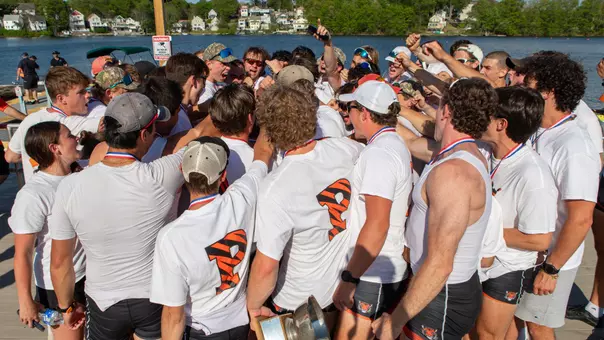
May: Princeton first Rowe Cup team title at Sprints since 2005
June: Princeton's first IRA medal in the 1V since 2006
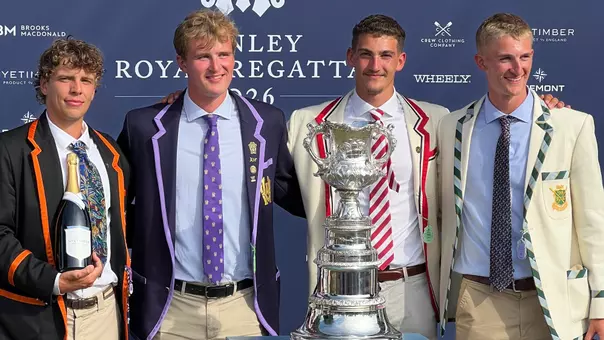
July: Competed in the Royal Henley Regatta, then won gold with the
Canadian M8+ at the Pan-American Games
August: Competed in the Senior World Rowing Championships, the biggest international regatta until the 2016 Olympics.
So, yes, September can have a little rest time with it.
After all, neither Barakso nor head coach Greg Hughes have lowered either their goals or their standards for 2016.
Culture is a word that heavyweight rowers have brought up a significant amount over recent years. In a sport like rowing, culture is everything. After all, the amount of training hours is hardly balanced by the amount of competition hours.
Check that. Competition hour.
Figure each race takes about six minutes, and Princeton raced 11 times last spring, including heats at Sprints and IRAs. That is a grand total of 66 minutes of competition, the payoff for hours upon hours of individual training, many of which come in the darkest, coldest months of the year.
If a culture of hard work isn't there, the wins won't come either.
“Each year, we've been chipping away at that [culture] and getting more guys fully committed,” Barakso said. “Everybody from the top to bottom really wants to push each other. Having the freshmen come into this culture, those guys are really eager to get started.”
Barakso was eager to get started once upon a time, but a back injury from his days at Brentwood College in Nanaimo, B.C., delayed his early training by several months. It could have been an overwhelming challenge to a kid trying to adjust to college life, but Barasko just went to work.
“It is a testament to that kid,” Hughes said of his ability to get into the 2V that first spring. “He is incredibly hard-working and focused. Marty strives for excellence in everything, and that comes through in his academics as well. He works hard.”
Barakso moved into the top boat as a sophomore, and he was there for a memorable 2015 season as well. While the team title at Sprints was Princeton's first in a decade, and the medal at IRAs showed how close the Tigers are to closing in on the Western powers, Barakso held another memory atop his list.
“That [Harvard] dual race, especially having all four boats beat Harvard that day, that was the best moment I have felt at Princeton so far,” he said. “Coming in and knowing that, for nine years, Harvard has beaten you, and then to have every boat win was a really special moment.”
Barakso loves the water, so much so that his father bought him a “Learn To Row” book for his 13th birthday.
“I lived on the ocean,” he said, “so I would always canoe, kayak, go fishing. To just glide over the water was really fun.”
As it turned out, Barkaso could glide pretty quickly, and by the age of 15, he was starting to speak with collegiate coaches. Hughes and Barakso's coach went to boarding school together, so there was a natural tie to Princeton, and Barakso was sold when he came for a visit.
The captain of the Princeton heavyweights during Barakso's freshman year was Michael Evans '13. Somewhat similar to Barakso, who was voted the 2016 captain, Evans was a lead-by-example, do-what-it-takes worker who helped begin the culture shift Princeton is feeling now.
The two may not have shared a boat in Orange and Black, but they did so in their native Canadian Red and White this past summer. In fact, they shared two boats, and they were able to splash a little gold into one.
Following the Princeton heavyweights' trip to Henley, where an unprecedented three boats represented Old Nassau at the historic British regatta, most of the Tigers got some much-needed time for rest and recuperation.
Barakso's rest time lasted the length of the flight back to Canada, where he earned a spot in the men's eight for the Pan-American Games, which were held in Saint Catherine's, Ont. Barakso's boat won gold, and then he paired with Evans to compete at the World Championships, where the boat earned a Top-10 finish.
“Having that experience and coming back to Princeton, I'm much stronger mentally,” he said. “I don't think there is a workout that could phase me. In terms of work ethic, you have such a better understanding of the drive and motivation to perform at your absolute best.”
Barakso has plans for the best possible finish to his Princeton career, which is why Hughes knows that this is the time to cut back.
“At some point, you have to fuel the car back up,” Hughes said. “He could blow everything away this fall, but we are thinking about May and June. The amount of intensity and energy required for peak performance from the end of March to the first week of September does require some down time.”
Barakso knows that winning the big things requires doing the little things, even when the little thing is rest. He'll need to be ready to work with his teammates for another cold winter, and he'll do so with a very clear focus to drive him.
“Getting on top of the podium at Sprints, hoisting that trophy and getting to throw our coxswain in the water, that's all that we're thinking about,” he said.
”When it's dark out and you're there every night in the winter, it's basically all you think about. Medals are won in the summer, but earned in the winter. With coming so close at IRAs, and not winning Sprints, it will be motivating a lot of people this winter.”
And those people will have the ultimate leader to follow.
by Craig Sachson